

50% and Rising: The Stocks Set to Win — and Lose — as the U.S.-Canada Trade War Reignites
The U.S. imposed 50% tariffs on $20B of Canadian goods on August 22, and Canada's dollar-for-dollar retaliation hits September 8. Here's the ticker-by-ticker read on who absorbs the shock and who's insulated.
Introduction
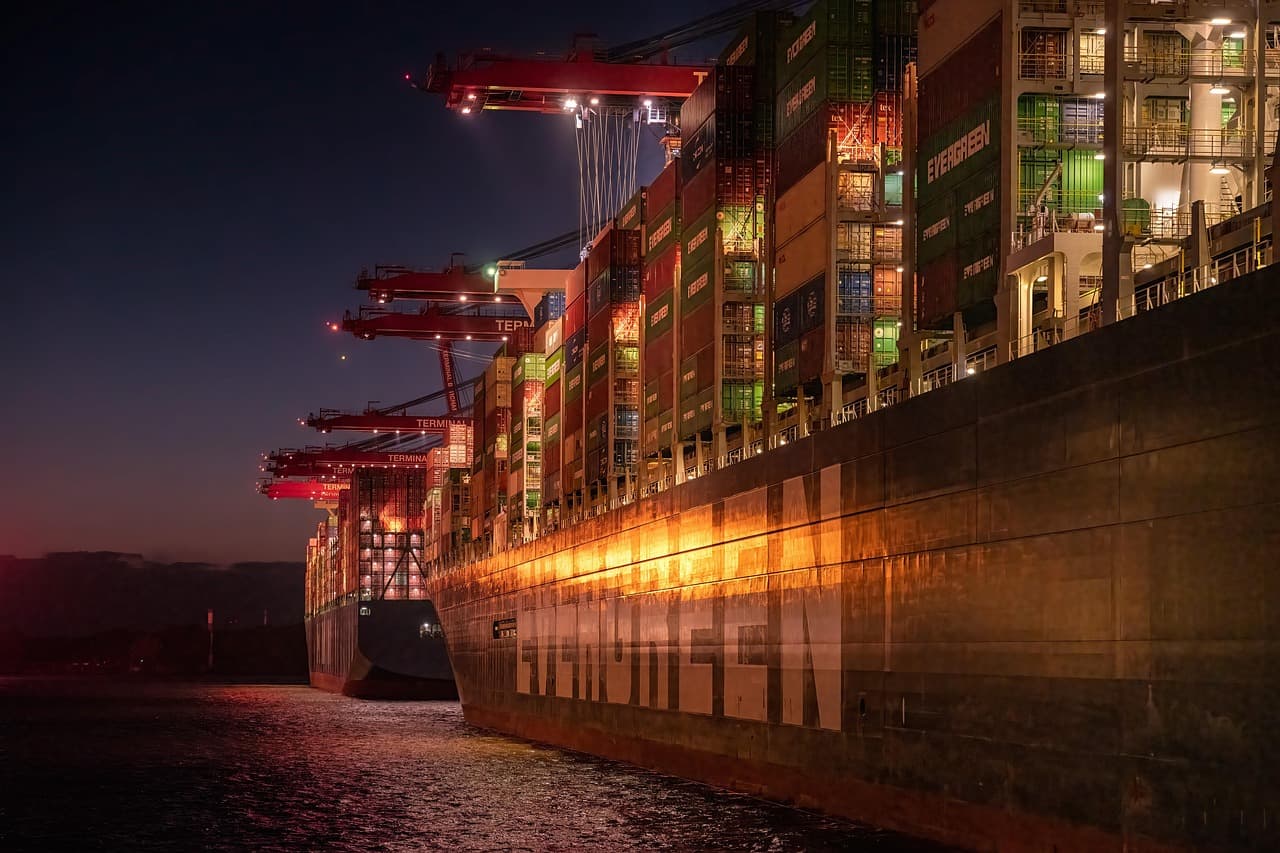
Trade talks between Washington and Ottawa collapsed late Friday night, August 21, and just after midnight the United States followed through on a threat it had twice paused: 50% tariffs on roughly $20 billion of Canadian goods took effect early Saturday, August 22, 2026 (Al Jazeera, Aug 22, 2026; PBS NewsHour, Aug 22, 2026). Canadian Prime Minister Mark Carney didn't soften the response — he told reporters Canada is effectively "at war" with its largest trading partner and confirmed Ottawa will hit back "dollar for dollar" starting September 8, targeting six U.S. sectors (NPR, Aug 22, 2026).
What makes this episode unusual isn't just the size of the tariffs — it's how fast Wall Street has been whipsawed by headlines that reversed within 72 hours. A deadline scare, a surprise pause, an apparent deal, then a Friday-night collapse: markets have now traded this story three different ways in a single week, and as of this writing they haven't yet had a full session to price in the actual breakdown. This piece maps out which publicly traded companies sit in the tariffs' direct path, which are structurally shielded, and what the next three to six months likely look like for each.
Key Takeaways
- The U.S. tariffs, imposed under the rarely used Section 338 of the Tariff Act of 1930, hit roughly $20 billion in Canadian exports — about 5% of Canada's total annual goods shipped to the U.S. — covering dairy, cement, furniture, clothing, alcohol, and dozens of other categories (Wiley Law, Aug 2026; PBS NewsHour, Aug 22, 2026).
- Canada's September 8 retaliation names six sectors — steel, dairy, agricultural equipment, appliances, pulp and paper, and electronics — but has not yet published product-level tariff lines or rates (Ag Bull Trading, Aug 2026; CNBC, Aug 22, 2026).
- Deere (DE), AGCO, and CNH Industrial face a reversal risk: all three got a tariff tailwind in June 2026 when Washington cut agricultural-equipment duties from 25% to 15%, a benefit Canada's incoming ag-equipment retaliation could partly offset (Yahoo Finance/Citi, 2026).
- Roughly 99% of Canadian energy exports now enter the U.S. tariff-free under USMCA compliance, insulating Canadian Natural Resources (CNQ) and Enbridge (ENB) from the direct impact of this dispute (GHY International, 2026).
- Domestic U.S. steelmakers Nucor (NUE), Steel Dynamics (STLD), and Cleveland-Cliffs (CLF) fell as much as 8% in a single session the week of August 17 on reports that Canadian steel tariffs might be cut — a reminder that their 2026 rally is built on the 50% import wall staying up, not on the trade war itself (Stocktwits/Yahoo Finance, 2026).
Anatomy of a Trade War Nobody Wanted
The current round traces back to July 20, 2026, when President Trump signed three proclamations under Section 338 of the Tariff Act of 1930 — a Depression-era statute that lets the president impose duties of up to 50% on a country found to be discriminating against U.S. commerce, and one that had gone essentially unused for decades before this year (NBC News, Aug 2026; Wiley Law, Aug 2026). That gave Ottawa a 30-day window before the tariffs took effect on August 19 — a deadline the market treated as very real. On August 18, with no deal in sight, the S&P 500 fell 53.30 points to 7,691.76 as Canada's S&P/TSX composite dropped nearly 300 points on the same fear (BNN Bloomberg, Aug 18, 2026).
Then came the first reversal. Late on August 18, Trump signaled a deal had been reached and paused the tariffs for three days pending paperwork; the S&P 500 rallied to 7,707.98 the next session (BNN Bloomberg, Aug 19, 2026). Markets held that optimism into Friday, August 21, when the S&P 500 closed at 7,674.37, up 0.78% on strong business-activity data, still betting a resolution was close (TheStreet, Aug 21, 2026). That bet failed hours later. Carney said Washington's final demands "asked too much and offered too little," talks broke off, and the 50% tariffs went live the next morning (CNBC, Aug 22, 2026).
Two things separate this round from the tariff noise of the past two years. First, the goods list is unusually consumer-facing: dairy, cement, honey, seeds, makeup, perfumes, clothing, jewelry, furniture, cameras, fabric, and hockey sticks are all named explicitly, alongside a note that some previously USMCA-protected products are now caught up too (PBS NewsHour, Aug 22, 2026). Second, this sits on top of — not instead of — tariffs already in force: the U.S. eliminated nearly all Section 232 exemptions on Canadian steel and aluminum in 2025 (currently 50%), and 25% duties on non-USMCA-compliant vehicles and auto parts from April 2025 remain active. Canada repealed most of its original 2025 retaliation by September 1 of that year but kept its own steel, aluminum, and auto counter-tariffs in place — which is exactly why Carney said Ottawa had offered to drop those specific three if Washington reciprocated, an offer the White House rejected (Congressional Research Service, 2025; CNBC, Aug 22, 2026). Three Canadian provinces bear the brunt: Quebec, Ontario, and British Columbia, where roughly 14.5% of provincial shipments to the U.S. are now affected (The Globe and Mail, 2026).
Bearish Losers: Who Absorbs the Tariff Shock
Deere, AGCO, and CNH Industrial — the ag-equipment squeeze
Deere (DE) is the largest agricultural-equipment maker in the world, and 34% of its total sales came from outside the U.S. and Canada in fiscal 2024 — a cross-border-dependent model that leaves it exposed on both the cost side (Section 301 import tariffs) and the demand side (Canada's new agricultural-equipment retaliation, one of the six sectors Carney named for September 8) (Yahoo Finance/Citi, 2026; Ag Bull Trading, Aug 2026). Manufacturing for this sector is concentrated in Illinois, Iowa, Wisconsin, and Minnesota, meaning the political fallout lands squarely in farm-belt districts. The irony is that DE, AGCO, and CNH Industrial (CNH) had just gotten a tailwind in June 2026 when Washington cut its own agricultural-equipment tariffs from 25% to 15% — a benefit AGCO and CNH stood to gain more from than DE, since both import a larger share of finished goods (Yahoo Finance/Citi, 2026). Canada's retaliation risks clawing that relief back before it fully shows up in guidance.
Wall Street's post-earnings reaction to DE already reflects the uncertainty: JPMorgan cut its price target to $570 (Neutral) and Bernstein to $580 (Market Perform) in the days around the collapse, while Robert W. Baird raised its target to $640 and Oppenheimer to $685 — a wider-than-usual analyst spread that signals genuine disagreement about how much of the tariff risk is already priced in (Defense World, Aug 22, 2026; TipRanks, 2026).
Ford, GM, and Magna — the cross-border supply chain
Ford (F) management has publicly flagged that long-lasting Canada and Mexico tariffs could "wipe out billions" in industry profit and push vehicle prices higher, and the automaker's reliance on cross-border parts and rare-earth inputs makes it acutely sensitive to any escalation (Simply Wall St, 2026). GM faces a similar structural exposure but with a different supply-chain mix, which is part of why the two automakers — while jointly lobbying for a unified North American trade framework — are pushing for different specific tariff terms behind the scenes (CBT News, Aug 2026).
The most direct casualty may be a Canadian name few U.S. investors track closely: Magna International (NYSE: MGA / TSX: MG), one of the largest auto-parts suppliers in North America, has already reported "hundreds of millions" in tariff exposure and sits directly in the crossfire of both the U.S. Section 301 duties and the new 50% import tariffs (Simply Wall St, 2026).
Whirlpool — a target sector, named directly
Whirlpool (WHR) is worth flagging on its own because appliances are one of the six explicit categories in Canada's September 8 retaliation list. The company had already trimmed its 2026 guidance as steel, resin, and freight costs ate into margins even before this latest escalation, leaving a roughly $2.5 billion market-cap company with little room to absorb a new round of cross-border cost pressure (Simply Wall St, 2026).
Canada Goose and Aritzia — apparel caught in the direct blast radius
Clothing is one of the largest categories in the U.S. tariff order by product count, and two Canadian retailers show it in their share prices already. Canada Goose (NYSE/TSX: GOOS) is down 14.1% since the tariffs were first announced on July 20 — unsurprising given the U.S. list specifically names jackets containing "down and waterfowl plumage," language that reads like it was written with the company in mind (iTiger, 2026). Aritzia (TSX: ATZ) shares fell on the same announcement, complicating a U.S. expansion the retailer had been leaning into (Kalkine Media, 2026).
Cement and construction — a cost problem, not a single ticker
Cement is one of the named product categories, and the practical effect runs both ways across the border. U.S. East Coast precast-concrete manufacturers depend on Canadian cement because domestic production can't fully cover regional demand, so the tariff is less a "short Canadian cement stocks" trade and more a margin and input-cost risk for U.S. construction and homebuilding firms that will need to either absorb higher costs or pass them to buyers (Construction Dive, 2026). Investors with homebuilder or building-products exposure should watch input-cost commentary in Q3 earnings calls rather than expect a single clean ticker to isolate the trade.
Bullish / Safe-Haven Winners
Canadian energy — the carve-out that keeps holding
The single most important exemption in this entire dispute is energy. Roughly 99% of Canadian oil exports now enter the U.S. tariff-free because they meet USMCA rules of origin, up from about 92% USMCA compliance in mid-2025 — and that compliance rate has kept climbing even as the rest of the trade relationship has deteriorated (GHY International, 2026). That structural exemption is why Canadian Natural Resources (CNQ), trading near C$63.46 with an 11-buy, 1-sell analyst consensus, and Enbridge (ENB), near $72.71, remain the cleanest safe-haven trades in this dispute (Investing.com, 2026; FinanceCharts, 2026). Enbridge carries an additional layer of insulation: its core Mainline pipeline operates under a tolling settlement locked in through 2028, which caps how much a trade-driven demand shock could move its cash flows even in a worse-case scenario (National Bank of Canada research cited via iTiger, 2026). TC Energy and Suncor benefit from the same USMCA energy carve-out.
U.S. domestic steel — protected, but a two-way trade
This is the least intuitive part of the story. Nucor (NUE), Steel Dynamics (STLD), Cleveland-Cliffs (CLF), and Century Aluminum (CENX) aren't hurt by the tariff war — they're benefiting from the pre-existing 50% Section 232 wall on Canadian steel and aluminum entering the U.S., which keeps foreign competition out of their home market. The proof came the week talks looked close to a resolution: on reports that Washington might cut Canadian steel and aluminum tariffs to 25% from 50%, NUE and CLF each fell roughly 6%, STLD dropped nearly 8%, and CENX slid 4.5% in a single session, because their 2026 rally is explicitly "predicated on the 50% import tariff" holding (Stocktwits/Yahoo Finance, 2026).
The collapse of talks — and the tariff wall staying fully up — is a relief for that domestic thesis. But it's genuinely two-sided: Canada's own steel retaliation, one of its six named September 8 sectors, hits these same companies' Canadian export sales, and Cleveland-Cliffs has a direct stake on the other side of the border too, following its $2.5 billion acquisition of Canadian steelmaker Stelco in November 2024, which accounts for roughly 15% of its total volumes (Motley Fool, Aug 21, 2026).
Saputo — the dual-footprint dairy hedge
Dairy is on both nations' lists, which normally would make Saputo (TSX: SAP) — the Canadian dairy giant, not to be confused with Germany's SAP SE — a clean bearish name. Instead it's a relative winner within its own sector: Saputo operates processing plants in both the U.S. and Canada, giving it the flexibility to reroute production and reduce its reliance on cross-border shipments in a way that smaller, export-dependent Canadian dairy processors simply can't match (iTiger, 2026).
Ticker-by-Ticker Forward Guidance, 3–6 Months
| Ticker | Company | Exposure | 3–6 Month Read |
|---|---|---|---|
| DE | Deere | Ag equipment, cross-border sales | Wide analyst spread ($570–$685 targets); watch if Sept 8 rate details hit the 15% relief gained in June |
| AGCO / CNH | AGCO / CNH Industrial | Ag equipment imports | More levered to June's US tariff cut than DE; first to feel a Canadian rollback |
| F / GM | Ford / General Motors | Cross-border parts, rare earths | Margin risk builds the longer duties stay layered on 2025's existing 25% auto tariffs |
| MGA / MG | Magna International | Parts supplier, both sides of border | Already reporting hundreds of millions in exposure; a bellwether for Tier 1 suppliers |
| WHR | Whirlpool | Named directly in Sept 8 list | Guidance already cut once in 2026; limited room to absorb a second hit |
| GOOS / ATZ | Canada Goose / Aritzia | Apparel exports to the U.S. | Direct product-line tariff hits; watch U.S. same-store sales for pass-through pricing |
| CNQ / ENB | Canadian Natural Resources / Enbridge | ~99% USMCA-exempt energy | Structurally insulated; the cleanest "sit this out" trade in the dispute |
| NUE / STLD / CLF / CENX | Domestic steel & aluminum | Protected import wall, but exposed via Canadian retaliation | Bullish on the wall staying up; watch Sept 8 steel-specific rate for the offsetting risk |
| SAP (TSX) | Saputo | Dual-country dairy production | Best-positioned dairy name; can reroute output rather than eat tariffs |
What to Watch Next
Two dates matter more than anything else on this list. First, September 8, when Canada is due to publish the actual product-level tariff lines and rates for its retaliation — until then, every company above is trading on a sector-level headline, not a confirmed number, and the eventual rate (Ottawa has signaled it could mirror its own 2025 practice of 25%, or match Washington's 50%) will materially change the math for DE, WHR, NUE, and every dairy and steel name on this list (Ag Bull Trading, Aug 2026). Second, the market's first full trading session after the Friday-night collapse — a real-time test of whether Wall Street treats this as a temporary standoff, as it did twice already this month, or as a durable regime change in North American trade.
Given how quickly this story has reversed direction — deadline fear, pause, apparent deal, collapse, all within one week — investors should treat any near-term "deal is close" headline with real skepticism until Ottawa's official tariff schedule is published and both sides' September 8 numbers are locked in.
[INTERNAL-LINK: how tariffs move stock valuations → SPXScore's forward-earnings framework]